| Home / Environment / Ecology and China | Tools: Save | Print | E-mail | Most Read |
| Green Turns to Gold |
| Adjust font size: |
Down in a small valley in northwest
The
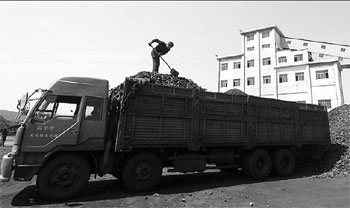
A worker loads coke onto a truck at the Gaoping Xinggao Coking Group. The Xinggao used to be a small coking plant in the city of The oven, which extends about 30 meters long like a freight train, is operated under negative pressure, which means the pressure inside the oven is lower than that outside. "In this way, waste gases in the oven are unable to leak out," explained Hou Kang, vice-president of Xinggao. Coking is a heavily polluting industry, with huge energy consumption. Producing a ton of coke requires 1.3 tons of coal, 8 kilowatt/hours of electricity and 0.6 ton of water, which results in the emission of a nasty cocktail of sulfur dioxide, and greenhouse gases such as methane and carbon dioxide, Hou says. In the same year, Xinggao was chosen as a pilot site by the TVE project, launched in 2001 by the Global Environment Facility, the United Nations Industrial Development Organization, the United Nations Development Program and the Chinese Ministry of Agriculture. The project's initiators suggested that Xinggao utilize the waste heat resulting from the coking process to generate power, which the company can also sell. Gao Zhicheng, president of Xinggao, says that his decision to implement the 300 million yuan (US$39.2 million) project was not an easy one. "No one in Pipelines were soon erected connecting the oven, four boilers, a turbine and a cooling tower. They carry waste gases as hot as After that, the high-temperature waste gases are cooled to In 2005, when Xinggao's waste-heat power generation plant became operational, it quickly became an exemplar of utilizing waste to help protect the environment and make a profit. The plant has an annual generating capacity of 120 million kilowatt/hours, only 3 percent of which is needed to maintain Xinggao's operations. The company sells the remainder to the public grid, from which it earns about 25 million yuan (US$3.3 million) a year. According to Hou, the operation of both the waste-heat power plant and the clean oven can help the company refrain from burning 460,000 tonnes of coal equivalent each year, therefore preventing the emission of 115,000 tons of carbon dioxide annually. Last year, the company reached an agreement with a German company to sell its carbon emission reductions (CERs) for US$ "It was a surprise. Now we have three sources of income - coke, power and carbon," Hou says. Now the company receives visitors from home and abroad almost every day. "Many coking plants are copying our model. Two of them are in the same city as us," Hou adds. Xinggao is just one example. The project has helped more than 100 TVEs in the coking, cement, brick and metal casting industries cut carbon dioxide emissions by more than 1.1 million tons annually. The key element of this project is to encourage TVEs to upgrade their technologies to reduce carbon emissions. Besides Xinggao, many coking plants and cement factories in The Chinese government has also set out rules requiring all new cement factories to build such facilities connected with their kilns.
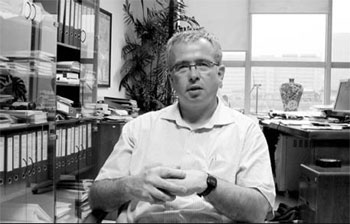
Rolf Dietmar, director of the Environment-Oriented Cost Management program with GTZ (German Technical Cooperation) The TVE project is just one example of the international partnerships lending support to Chinese enterprises in their switch from energy consumption to energy efficiency. In addition to upgrading technologies, cost management is also a key element of their approaches. In A consultancy and training program, the Environment-Oriented Cost Management (EoCM) program, which was launched in 2004, aims to address industrial pollution and waste of energy through a "unique approach," says Rolf Dietmar, the program's director at GTZ (German Technical Cooperation). It is "unique" in two ways, Dietmar says -being "profit-oriented" and "do-it-yourself". "We don't order companies to be environmental. Instead, we tell them that we can help them increase their efficiency and cut their costs," Dietmar adds. In his opinion, few bosses of private companies, especially small and medium-sized enterprises (SMEs), have implemented the concept of a differentiated cost management. They are unaware that any waste of raw materials, power or water may jeopardize not only the environment, but competitiveness and sustainability of their businesses, he adds. The program therefore offers EoCM, an instrument tailored for SMEs in developing countries and conducts special training for selected companies on how to use it. "It is different from other approaches," says Dietmar, who has been in In a county downtown Hangzhou, Zhejiang Lantian Environmental Protection High-tech Co Ltd is one of the beneficiaries of the program. In late 2004, the company sent its senior staff to take part in EoCM training. Lu Zhengzhang, head of a factory belonging to Lantian, recalls that every employee of the workshop participated in discussions about where and how to reduce its non-product output. The company produces Freon substitutes, which require a lot of catalysts that are heavily polluting and hard to resolve. "So we decided to begin with the catalyst," Lu said. They detected that the facility was made of a metal that could increase the consumption of catalysts, so they replaced it with another material to extend the use of catalysts. Then, by adopting new technology, they began to be able to recycle catalysts. "Not only has the use of catalysts been reduced, but the water and power consumption has also decreased," Lu says. Since 2004, the workshop has implemented 27 measures, which have resulted in the reduction of water consumption by 60 percent, power consumption by 3.2 percent and waste catalysts by nearly 90 percent, all for an investment of just 342,000 yuan (US$44,700). Now Lantian has applied EoCM in all three factories. More importantly, when they began to add new facilities, they take into consideration energy efficiency and cost management issues, such as water condensate recovery. By 2006, employees at 15 companies were trained in the program and all of them are still implementing EoCM during their production. This year, the program plans to train staff at another 10 companies. According to Dietmar, the success of the program lies in its aim for capacity building, rather than a one-stop service. The Whatever approach they take, these projects are taking With this goal, more and more Chinese companies are taking actions. ( |
| Tools: Save | Print | E-mail | Most Read |
 |
| Related Stories |
|
||
